
You finally mount that massive new 4K TV to the wall, pop some popcorn, and queue up a blockbuster movie, only to find the dialogue sounds like it is coming from a tin can. The visual presentation is incredible, but the flat, lifeless audio completely ruins the cinematic immersion. Finding the right audio upgrade can feel overwhelming when trying to compare compact soundbars to full surround sound systems.
Our local AV experts have already sorted through the technical noise to help you find the perfect acoustic match for your living space. In this guide, we break down the hardware differences between all-in-one bars and component audio setups, compare the installation costs, and help you choose the ideal system to maximize your home entertainment experience.
Upgrade Your Home Audio Setup Today
Discover premium audio solutions tailored to your room size and acoustic preferences.
Explore surround sound systemsKey Takeaways
- Hardware Differences: Soundbars offer an active, all-in-one solution, while multi-speaker component setups require a separate AV receiver and passive speakers.
- Spatial Constraints: Compact bars work best in smaller living rooms or apartments, whereas dedicated component audio thrives in larger media rooms with proper acoustic space.
- Audio Fidelity: A true multi-channel layout physically moves more air and separates frequencies better, resulting in richer mid-range tones and clearer dialogue.
- Long-Term Investment: While full AV receiver configurations have higher upfront costs and wiring needs, they allow you to swap individual parts over time instead of replacing the entire unit.
The Anatomy of Soundbars vs Component Audio

Understanding the hardware is the first step in deciding which audio path to take. A soundbar is an all-in-one active speaker configuration with built-in amplifiers. You simply plug the unit into the wall and connect it to your TV. In contrast, traditional component setups use passive speakers powered by a central AV receiver.
The AV receiver acts as the brain of the operation, decoding the audio signals and sending power to each individual speaker. This separation between the processing hardware and the physical speakers creates a much wider soundstage. When you use discrete channel audio, the system sends specific sounds to specific physical locations in the room to create highly accurate positional tracking.
Virtual vs Discrete Channels
Many compact bars rely on virtual surround technology, which bounces sound waves off your walls to trick your ears into hearing audio from behind you. While this works well in perfectly square rooms, it cannot replicate the precision of discrete channel audio. A component setup physically places a speaker behind you, so when a helicopter flies overhead on screen, the sound actually travels through the room.
Additionally, how your system handles audio compression matters heavily. When a TV sends a heavily compressed audio signal through a standard optical cable, a basic all-in-one bar masks the lost data. A high-quality AV receiver unpacks uncompressed audio formats directly from the source device, providing significantly clearer output.
Feature Breakdown by Audio Setup Type
| Feature | Premium Soundbar | Component 5.1/7.1 System |
|---|---|---|
| Audio Fidelity | Relies on smaller drivers and virtual processing for positional audio. | Uses large drivers and discrete channels for true directional sound. |
| Installation Complexity | Plug-and-play setup takes just a few minutes to connect. | Requires running speaker wire and calibrating a separate AV receiver. |
| Space Requirements | Sits neatly under the TV with an optional wireless subwoofer. | Demands dedicated floor or wall space for multiple speaker cabinets. |
| Budget Range | Excellent entry-level pricing with high-end models capping out moderately. | Higher entry cost due to the receiver, but scales upward based on speaker quality. |
| Dolby Atmos Capabilities | Uses upward-firing drivers to bounce height channels off the ceiling. | Utilizes physical in-ceiling or mounted speakers for authentic overhead sound. |
| Ideal Use Cases | Perfect for apartments, bedrooms, and minimalist living rooms. | Built for dedicated media rooms and uncompromising home theater enthusiasts. |
Matching Your Audio Setup to Your Room Size
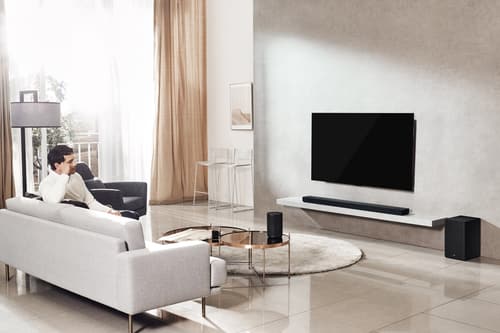
Your physical space often dictates the effectiveness of your audio hardware long before you make a purchase. You must evaluate the following spatial elements before choosing a system:
- Room acoustics: Hardwood floors and bare walls bounce audio erratically compared to carpeted rooms.
- Ceiling height: Vaulted ceilings prevent up-firing soundbar drivers from properly reflecting audio downward.
- Floor plans: Open-concept living areas lack the necessary walls to contain and bounce virtual surround effects.
Dedicated media rooms are the natural habitat for multi-speaker setups. In these spaces, you can properly position left, right, and center channels around the screen while placing surround speakers at ear level behind the seating area. You can also implement acoustic treatments to absorb unwanted echoes and maximize audio clarity.
When dealing with apartments or small living rooms, spatial limitations make compact bars highly appealing. You get an immediate TV audio upgrade without running cables across walkways or losing precious square footage to speaker stands. When running in-wall speaker wire for rear channels in a larger room, we often recommend using 14-gauge CL2-rated cable to meet local fire codes and maintain signal integrity over long distances.
Does Virtual Surround Match True Surround?

The short answer is no, virtual processing cannot fully match the dynamic range and vocal clarity of a discrete setup. Modern Dolby Atmos soundbars use up-firing drivers to push sound toward the ceiling, hoping it bounces back down to the listener. True Dolby Atmos relies on physical speakers installed directly above you, creating genuine spatial audio that tracks objects moving overhead.
Audio quality largely comes down to the laws of physics. Larger speaker drivers physically move more air, creating a richer mid-range that compact soundbars struggle to replicate. This air movement is what gives cinematic dialogue weight and makes musical scores feel expansive rather than compressed.
Advanced formats like DTS:X and spatial audio rely heavily on low-frequency effects managed by powerful subwoofers. While a slim setup can produce adequate bass, a dedicated home theater system separates these frequencies cleanly. This distinct separation keeps the heavy explosions from muddying the voices of the actors on screen.
The Pros and Cons of Upgrading Surround Sound Systems
Investing in premium audio is an exciting way to transform your movie nights, but every setup comes with structural trade-offs. Choosing between an all-in-one bar and a multi-speaker configuration means balancing aesthetics, budget, and acoustic performance. Below is a breakdown of the benefits and drawbacks of moving to a full component system.
Pros
Superior Dialogue Clarity
Dedicated center channel speakers handle dialogue exclusively, preventing sound effects from drowning out quiet conversations.
Modular Upgrades
You can swap out an outdated AV receiver for a newer model without having to throw away your high-quality passive speakers.
True Directional Audio
Physical speakers placed around the listener provide genuine positional tracking for movies and video games.
Customizable Layouts
You have the freedom to choose exactly where each speaker sits to optimize the soundstage for your specific seating arrangement.
Cons
Extensive Wiring
Connecting multiple passive speakers requires running long lengths of speaker wire from the AV receiver to every corner of the room.
Higher Initial Investment
Purchasing a receiver, multiple speakers, and a subwoofer separately costs significantly more upfront than an all-in-one package.
Budgeting for Your Home Theater Upgrade

The cost spectrum for audio equipment is massive, but it is important to look at the complete picture. High-end soundbars can actually rival the cost of entry-level component systems. If you spend top dollar on a premium bar, you get excellent sound in a highly convenient package, but you are buying a closed ecosystem.
Full component systems come with hidden costs that you must factor into your budget. Beyond the speakers themselves, a dedicated media room build requires several additional purchases:
- A multi-channel AV receiver to process the audio signals.
- Long spools of specialized speaker wire.
- Heavy-duty wall mounting hardware for the elevated channels.
However, the long-term ROI difference heavily favors modular component systems. A receiver setup allows for incremental upgrades over the next decade. If an all-in-one bar becomes outdated or a single internal driver blows out, you have to replace the entire unit. We always guide readers to weigh these structural factors when deciding between a DIY plug-and-play unit and hiring professional AV integrators.
Ready to Experience Premium Surround Sound Systems?
Choosing the right audio setup comes down to evaluating your room size, setting a realistic budget, and deciding how much audio fidelity you truly want. While compact bars offer an incredibly convenient upgrade for tight spaces, nothing beats the immersive power of a multi-channel setup. A dedicated system physically moves more air and delivers authentic directional audio for your favorite movies.
Ready to transform your media room? Explore the best surround sound systems and consult with the experts at Carolina Custom Sound. We offer expert showroom guidance, meticulous acoustic calibration, and professional installation services that big-box stores simply cannot match.
Frequently Asked Questions about Surround Sound Systems
Soundbars with Dolby Atmos use up-firing drivers to bounce audio off the ceiling, which is far less precise than using discrete ceiling speakers. Physical speakers installed overhead deliver genuine object-based audio that virtual bouncing cannot replicate.
Most wireless soundbars operate on closed, proprietary ecosystems that do not accept traditional wired passive speakers. You generally must buy the specific wireless rear speakers manufactured by the exact same brand to expand the system.
A 5.1 channel setup uses three front speakers, two rear surround speakers, and one subwoofer to create a complete 360-degree soundfield. A 7.1 configuration adds two additional side surround speakers, bridging the gap between the front and rear for smoother audio panning.
You do not need an AV receiver if your speaker system is active, because the amplifiers are already built directly into the speaker cabinets. You simply plug the active speakers into a power source and connect them directly to your television.
The most effective method for hiding wires is routing them securely through the walls and attic space down to a wall plate near the AV receiver. If opening the drywall is not an option, you can conceal the speaker wire inside paintable baseboard raceways or under area rugs.
A professionally installed home theater setup with clean in-wall wiring can make a house significantly more appealing to potential buyers. Buyers often view a dedicated, move-in-ready media room as a premium luxury feature during the home viewing process.
Why Trust Carolina Custom Sound?
Family-owned and operated for over 20 years. Carolina Custom Sound is a national award-winning team of well-trained professionals whose purpose is to integrate lifestyle systems into homes, offices, and other locations. We are proud to have served this community for so long and wouldn’t be here without our loyal clients. We create a more relaxing, engaging, and enjoyable automation experience for our residential and commercial clients.
Our Clemmons Showroom brings the immersive experience of our custom home installations to life with unbridled sound and audio/video which you can feel in person. Visit our Clemmons showroom or let us help you in any of our surrounding service areas like Winston-Salem, Greensboro, Lake Norman, and more!
Shop Surround Sound Systems at Carolina Custom Sound
At Carolina Custom Sound, we provide quality top-of-the-line brands for every project. We are known to be sticklers for details, from start to finish on every job. Our installation professionals measure, plan, design, and program with great care to make sure nothing is overlooked. Whether you call us or visit, contact us today! Let us bring your smart home vision to life.