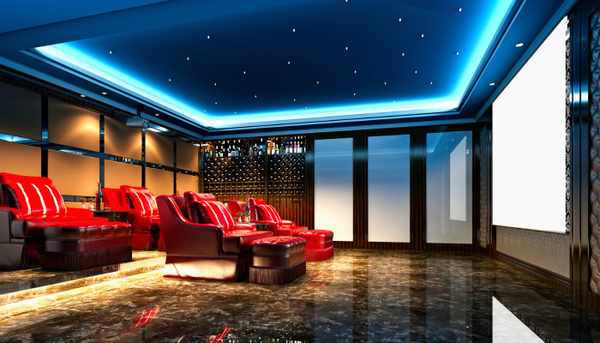
At a Glance:
The Foundation: Home Cinema Design and Media Room Layout
Visuals: 4K Laser Projector, Throw Distance, and Ambient Light Rejection
Audio: Surround Sound System, AV receiver, and Dolby Atmos
Physical Space: Home Theater Seating and Home Theater Lighting
Finishing Touches: Acoustic Treatment and Audio Calibration
Why Trust Carolina Custom Sound?
Ready to turn your bonus room, basement, or loft into an epic home movie theater? It's more achievable than you think. Forget what you've seen in luxury magazines; a truly immersive cinematic experience is within reach for anyone with a little planning.
Building a great home movie theater isn't about buying the most expensive gear; it's about smart choices. This guide will walk you through everything from projectors and sound to lighting and seating, ensuring your finished room performs like a professional installation. Let's build your dream escape.
Create the Perfect Movie Getaway.
Get expert assistance in creating the perfect retreat for movies, sports games, and your favorite shows. Contact the specialists at Carolina Custom Sound today and find out how we can bring your dream home theater to reality.
Custom Home Theater OptionsThe Foundation: Home Cinema Design and Media Room Layout

Every great home theater starts with a solid plan. This is the core of home cinema design: creating a space where the image, sound, and comfort work in harmony. It’s tempting to focus on fancy speakers, but the room itself dictates how well that equipment performs. A room’s dimensions, ceiling height, and windows all influence speaker placement and screen choice. The goal is to design a space that performs exceptionally well.
This planning phase directly impacts the media room layout. It involves deciding where the screen, seats, and equipment will go. Speaker angles and listener position are critical for convincing surround sound, as outlined by Dolby's setup guides. The layout must also consider practical factors like aisles, door swings, and sightlines to ensure the room is easy to use. A well-designed room feels both inspiring and practical every time the lights dim.
How to plan the room before buying gear
- Measure the room's dimensions, including windows and doors.
- Determine the best wall for the screen and where the main seating will go.
- Locate all electrical outlets, network ports, and vents.
- Decide if the room is a dedicated theater or a multipurpose space.
- Plan for essentials like wiring, acoustic treatments, and future upgrades.
Visuals: 4K Laser Projector, Throw Distance, and Ambient Light Rejection
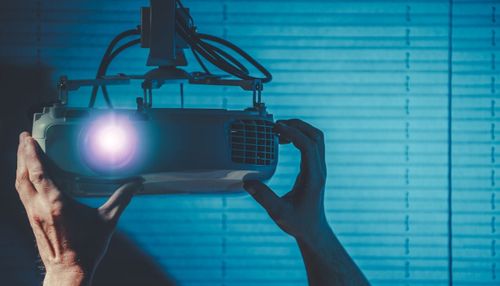
The projector is the visual engine of a home movie theater. A 4K laser projector is a smart long-term choice, offering strong brightness, dependable color, and low maintenance with a long lifespan.
Next is understanding throw distance, the distance a projector needs from the screen to create a specific image size. Getting this wrong leads to frustration. Installers start with room dimensions and desired screen size to narrow projector options. Long rooms offer flexibility, while shorter spaces may require a short-throw model.
Screen technology also deserves attention. A matte white screen works well in a dark, dedicated room. In spaces with windows or other light sources, ambient light rejection materials are essential to preserve contrast and prevent a washed-out image. This decision can be the difference between a decent setup and a truly cinematic home movie theater.
Screen technology checklist
- Base screen size on seating distance.
- Confirm the projector’s recommended throw distance before mounting.
- Match brightness to the room's light conditions.
- Use ambient light rejection screens for rooms with uncontrolled light.
- Verify aspect ratio; 16:9 is great for streaming, while wider formats feel more theatrical.
- Consider motorized or retractable screens for premium setups.
When comparing products, brands like Sony, Epson, JVC, and Hisense are common choices. A premium 4K laser projector from these manufacturers can anchor a system built for movies, gaming, and sports.
Learn more: How to Choose The Best 4k Projector for Home Theaters
Audio: Surround Sound System, AV receiver, and Dolby Atmos
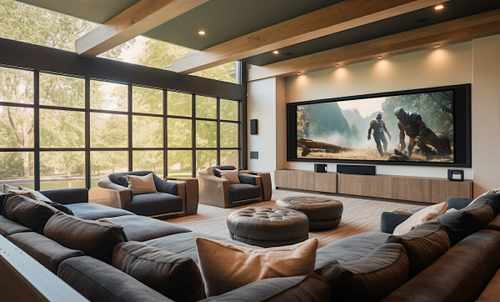
A great picture is only half the battle; sound creates the immersion. A quality surround sound system makes your room come alive, adding weight to action scenes and richness to quiet moments.
The AV receiver is the command center of your home theater. It processes audio and video, powers speakers, and manages inputs. When choosing one, consider its channel count, power, and HDMI capabilities to ensure it meets your needs today and allows for future expansion.
For the ultimate audio experience, look to Dolby Atmos. This technology adds height channels, allowing sound to move above and around you. Rain will sound like it's falling from your ceiling, and planes will feel like they're flying overhead. A surround sound system with Dolby Atmos can make old movies feel new.
How to build the right speaker package
- Start with a timbre-matched front stage (left, center, and right speakers).
- Add side surrounds at or just above ear level.
- Include at least one subwoofer for impactful bass.
- Add height channels for Dolby Atmos if possible.
- Your AV receiver's channel count will determine the maximum size of your system.
Carolina Custom Sound offers premium products, including discreet in-wall and in-ceiling speakers from brands like Bowers & Wilkins, to create a room that sounds as clean as it looks.
Learn more: Why Bowers and Wilkins Leads in Premium Sound
Physical Space: Home Theater Seating and Home Theater Lighting
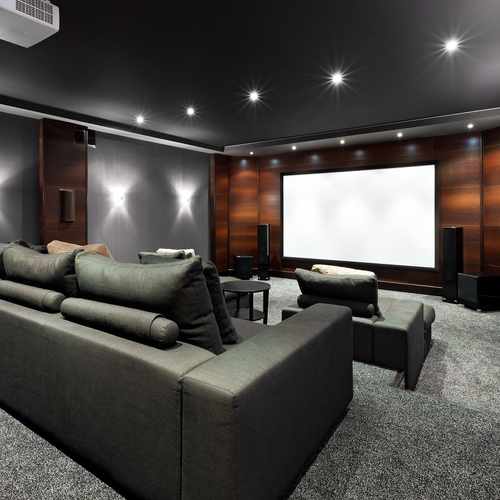
Now for the personal touches. Proper home theater seating considers posture, sightlines, spacing, and long-term comfort. Each seat needs a clear view, neck and lumbar support, and easy access to conveniences like cup holders. For multiple rows, a riser is essential. Seating choices should match the room's purpose; a family room might have a large sectional, while a dedicated cinema could feature motorized recliners.
Home theater lighting is equally important. A layered approach with recessed cans, dimmable sconces, and step lights allows the room to shift between different modes effortlessly. Good lighting protects screen contrast while ensuring the space is safe to navigate.
Seating and lighting checklist
- Ensure every seat has a clear view of the screen.
- Provide ample aisle space for easy movement.
- Use dimmable fixtures with warm light.
- Incorporate pathway lighting for safety.
- Prewire for motorized shades if the room has windows.
Technical Execution: Fiber Optic HDMI, HDMI eARC, and Smart Home Integration
This stage is often underestimated in DIY projects, yet it's crucial for long-term reliability.
For runs between equipment and projectors, fiber optic HDMI cables prevent signal loss over distance, which is key for smooth 4K playback. Without them, you risk frustrating dropouts.
Another essential feature, HDMI eARC (Enhanced Audio Return Channel), sends high-quality audio from a display back to the sound system through one cable. This simplifies setup and improves audio performance, supporting advanced formats with more bandwidth than older ARC versions.
Finally, smart home integration ties all the hardware together for a seamless experience. Imagine pressing one button to dim the lights, lower the shades, and start the movie. Platforms like Control4 or Savant make a theater feel exciting, not complicated. A great theater shouldn't require a tutorial to operate.
Finishing Touches: Acoustic Treatment and Audio Calibration
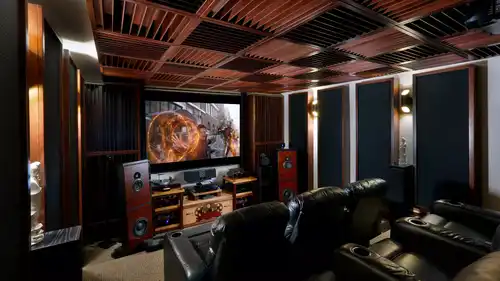
Here is where a good room becomes truly great. Acoustic treatment manages sound reflections and bass issues that even the best speakers can't overcome. While soft furniture helps, dedicated panels and bass traps deliver more predictable results.
Next is audio calibration. Most modern receivers have automated setup systems like Audyssey or Dirac Live, but manual checks are still necessary. Proper audio calibration ensures clear dialogue, tight bass, and natural surround effects.
Final tuning checklist
- Install acoustic treatment at key reflection points.
- Add bass control if the room sounds boomy.
- Run your receiver's room correction software.
- Manually verify speaker distances and levels.
- Test familiar movie scenes after audio calibration to check performance.
Carolina Custom Sound Expertise
For homeowners in the Carolinas, working with a local specialist like Carolina Custom Sound can prevent common missteps. Our team brings practical experience to every project, from selecting the right 4K laser projector to planning speaker locations and control systems.
Carolina Custom Sound also manages details often overlooked in DIY setups. A clean media room layout, proper equipment ventilation, and smart subwoofer placement all impact the final result. By working with respected brands and offering local support, we ensure your system is reliable and easy to upgrade.
Experienced guidance provides clarity and confidence. A home movie theater should be an exciting addition, not a source of compromise.
Pros and Cons of DIY vs. Professional Setup
|
Feature |
DIY Installation |
Professional Installation |
|
Cost |
Lower labor costs and more flexibility to phase purchases over time. |
Higher upfront investment due to design, installation, and programming. |
|
Projector Setup |
Projector alignment and throw distance calculations can be difficult without experience. |
Accurate projector placement, clean mounting, and optimized image geometry. |
|
Audio Performance |
Basic speaker placement is possible, but advanced tuning is often limited. |
Better surround sound system design, room analysis, and professional calibration. |
|
Wiring |
Visible cables and troubleshooting issues are more common. |
Cleaner infrastructure with hidden wires, tested terminations, and rack organization. |
|
Control & Ease of Use |
Multiple remotes and inconsistent settings can create frustration. |
Streamlined automation, dependable smart home integration, and simpler daily use. |
|
Customization |
Good for hands-on enthusiasts who enjoy trial and error. |
Best for homeowners who want polished results and expert recommendations. |
Learn more: The Home Theater Design Process in Winston-Salem NC
Ready to build an extraordinary home movie theater? The best viewing experiences don't happen by accident. They come from smart planning, careful product selection, and sweating the small details. From sketching the room to the final audio calibration, each step brings your vision to life. Stay focused and inspired to create a space that makes every movie night an event.
Frequently Asked Questions
To find the right projector, match its brightness, placement options, and resolution to your room. Dedicated dark rooms can use projectors that prioritize deep black levels. Brighter, multipurpose rooms often need a 4K laser projector with higher light output and a compatible screen. Also, consider the room's mounting options and required throw distance. Planning these details first will prevent major issues down the road.
Yes, a real projection screen typically offers much better consistency, color neutrality, and contrast than a painted wall. While a wall can be a temporary solution, it lacks the optical properties for premium performance. For rooms with ambient light, an ambient light rejection screen can dramatically improve image quality and give your theater a more professional look.
A 5.1.2 or 7.1.2 setup provides a great mix of performance and practicality for most rooms. This layout combines a traditional surround sound system with height channels for Dolby Atmos effects. The ideal speaker placement will vary based on the room's size, seating arrangement, and the AV receiver's capabilities. Strategic placement is more effective than simply adding more speakers.
Yes. An energy-efficient home theater is achievable through careful product selection, power management, and system design. Choosing components with smart standby functions, appropriately sized amplifiers, and displays with high efficiency ratings can significantly reduce waste. Look for devices with ENERGYSTAR® certification where applicable. A well-designed system can deliver thrilling performance without excessive power consumption.
Why Trust Carolina Custom Sound?
Family-owned and operated for over 20 years. Carolina Custom Sound is a national award-winning team of well-trained professionals whose purpose is to integrate lifestyle systems into homes, offices, and other locations. We are proud to have served this community for so long and wouldn’t be here without our loyal clients. We create a more relaxing, engaging, and enjoyable automation experience for our residential and commercial clients.
Our Clemmons Showroom brings the immersive experience of our custom home installations to life with unbridled sound and audio/video which you can feel in person. Visit our Clemmons showroom or let us help you in any of our surrounding service areas like Winston-Salem, Greensboro, Lake Norman, and more!
Shop Home Movie Theaters at Carolina Custom Sound
At Carolina Custom Sound, we provide quality top-of-the-line brands for every project. We are known to be sticklers for details, from start to finish on every job. Our installation professionals measure, plan, design, and program with great care to make sure nothing is overlooked. Whether you call us or visit, contact us today! Let us bring your smart home vision to life.